


credit card fee sign template. Learn the exact wording for a 3% or 4% surcharge, where to place the sign, and full legal requirements.
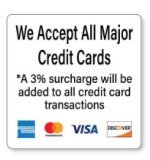
However, implementing such a fee requires absolute transparency and strict adherence to rules set by card brands (Visa, Mastercard, etc.) and state laws. This is where the credit card fee sign becomes the single most critical tool for your business. It is more than just a piece of paper; it’s a legal notification designed to ensure full compliance and maintain positive customer relations.
This comprehensive guide will walk you through the precise requirements for creating a fully compliant, customer-friendly credit card fee sign for business, including exact wording templates and strategies for maximum Google ranking potential.
For online businesses, this means the fee must be clearly disclosed on the landing page and again on the checkout screen before the total is calculated.
[td]Template Wording[/td][td]Keywords Addressed[/td]
[td]Template Wording[/td][td]Keywords Addressed[/td]
[td]Template Wording[/td][td]Keywords Addressed[/td]
[td]Template Wording[/td][td]Keywords Addressed[/td]
Key Design Tips for Maximum Impact:
Step 2: Choose Your Template: Select a professional credit card fee sign template that matches your decided percentage.
Step 3: Print and Secure: Print the printable credit card fee sign on high-quality paper.
Step 4: Place Strategically:
* Place the main, larger sign at the entrance (door or window).
* Place a smaller, identical sign at the point-of-sale (POS terminal, checkout desk).
* Online: Ensure the fee is calculated and displayed before the customer finalizes the purchase.
By ensuring your sign is visible, uses precise wording (such as those detailing 3% credit card fee or 4% credit card fee), and clearly exempts debit and cash, you protect your business from potential fines and maintain the goodwill of your customers. Use a free credit card surcharge sign template today, place it strategically, and secure your profit margins effectively.
The Ultimate Guide to the Credit Card Fee Sign: Compliance, Wording, and Free Printable Templates
Understanding the Credit Card Surcharge and Why Your Business Needs a Clear Notice
In today’s digital economy, accepting credit card payments is essential, but the associated processing fees can significantly impact a business's bottom line. For many US merchants, passing a portion of these costs onto the customer—known as a credit card surcharge or credit card fee—is a necessary strategy.However, implementing such a fee requires absolute transparency and strict adherence to rules set by card brands (Visa, Mastercard, etc.) and state laws. This is where the credit card fee sign becomes the single most critical tool for your business. It is more than just a piece of paper; it’s a legal notification designed to ensure full compliance and maintain positive customer relations.
This comprehensive guide will walk you through the precise requirements for creating a fully compliant, customer-friendly credit card fee sign for business, including exact wording templates and strategies for maximum Google ranking potential.
Part I: The Legal Framework—Surcharge vs. Convenience Fee
Before you put up any credit card fee sign for customers, it is crucial to understand the rules governing how you can charge an extra amount for card usage in the United States.The Two Methods of Passing on Costs
The terms surcharge and convenience fee are often used interchangeably, but they represent two distinct fee types with different legal requirements.1. The Credit Card Surcharge
A surcharge is an extra fee that a merchant adds to a transaction specifically to offset the processing fees they pay the card companies.- Application: It applies to all transactions where a credit card is used, regardless of how the payment is made (in-store, online, etc.).
- Cap: Card brand rules (Visa, Mastercard) often cap the surcharge percentage—usually at 4% (or the cost the merchant pays for processing, whichever is lower).
- Key Compliance Rule: The fee must not be applied to debit card transactions. The compliant credit card fee sign must clearly state this distinction.
2. The Convenience Fee
A convenience fee is a fixed or flat charge added to a transaction for the convenience of using a non-standard payment channel (e.g., paying a utility bill online, over the phone, or through an outsourced payment processor).- Application: It is only allowed when the merchant has other payment options available that do not incur the fee (like in-person cash payment).
- Key Distinction: It is a fee for using a specific payment channel, not the card type itself. This fee is more common in sectors like government, education, and utilities.
User Query Covered: How do I use a credit card convenience fee sign?
Answer: A convenience fee sign must specify that the fee is for the channel of payment (e.g., "online processing fee") and that alternative, free payment methods are available (e.g., "No fee for in-person cash payment").
State-Specific Surcharge Laws
While major card brands allow surcharging, several US states have historically had—or still maintain—restrictions on credit card surcharges. While legal battles have changed the landscape, businesses must verify local rules.- Check Local Regulations: Always confirm your state's current laws. Even where surcharging is legal, strict sign requirements and notification periods must be followed.
- Required Notification: Most card brands require merchants to notify them (Visa/Mastercard) 30 days before implementing a surcharge. Failure to do so can result in fines or revocation of your ability to accept cards.
Part II: Key Components of a Compliant Fee Sign
When creating your credit card fee sign for customers, compliance hinges on four non-negotiable elements. Your sign must be an undeniable source of information for the customer before they complete their transaction.1. The Clear Statement: Surcharge or Fee
Your sign must explicitly state that an extra charge is being applied. Avoid vague terms. Use direct language like "Credit Card Surcharge Applied" or "A Processing Fee will be Added."2. The Surcharge Amount: The Crucial Percentage
The fee must be clearly specified as either a percentage or a flat dollar amount. It must be uniform across all credit card types (Visa, Mastercard, Amex, Discover).- User Query Covered: What is a __% credit card fee?
- Best Practice: Use the exact number, such as: "A 3% Surcharge," "A 3.5% Processing Fee," or "A 4% Credit Card Charge."
3. Payment Type Distinction: Exclusion is Key
This is the most frequent reason for non-compliance. Your sign must inform customers that the fee only applies to credit cards.- Required Wording: Your credit card fee sign must make it clear that the fee does not apply to debit cards or cash payments.
- Why? Card brand rules view debit cards differently from credit cards. Applying a fee to a debit transaction is often a direct violation.
4. Prominent Placement: Visibility at Two Points
A sign is useless if it's hidden. Compliance requires "clear and conspicuous disclosure" at two specific points:- Point 1: Entrance/Door: Customers must be notified before they enter the business or begin shopping.
- Point 2: Point-of-Sale (POS): A smaller sign must be clearly visible where the customer presents their card (e.g., next to the card terminal, on the checkout screen).
User Query Covered: What are the requirements for a credit card surcharge sign?
Summary Answer: Clear fee percentage, no fee on debit/cash, and display at both the entrance and POS.
Part III: Mastering the Wording—Templates for the US Merchant
Effective wording prevents customer surprise and staff disputes. The language should be concise, professional, and compliant. Below are templates that address specific percentage-based keyword searches like 3% credit card fee sign and 4% credit card fee sign.Template 1: The Standard Percentage Surcharge (Focusing on 3%)
This is the most common and clear wording for a business absorbing a 3% processing cost.| "NOTICE: A 3% Surcharge will be applied to all credit card transactions to offset our processing costs. This fee does not apply to payments made with cash or debit cards." | 3% credit card fee sign, How to word 3% credit card fee? |
Template 2: The Higher Fee Wording (Focusing on 4%)
If your cost of acceptance is higher, ensure you use the term "Surcharge" or "Processing Fee" clearly, as long as it does not exceed the legal limit (typically 4%).| "To maintain our low pricing, a 4% Credit Card Surcharge will be added to payments made by credit card. We gladly accept cash and debit with no additional fee." | 4% credit card fee sign, 4 percent credit card fee sign |
Template 3: The 3.5% Fee and Payment Type Clarity
For non-standard percentages, precision is paramount.| "Please note: A 3.5% non-cash payment adjustment is applied to all credit card purchases. This adjustment is waived when payment is made by cash or PIN-based debit." | credit card fee sign 3.5 percent, 3.5 credit card fee sign |
Template 4: Covering Third-Party Processors (Venmo, PayPal, etc.)
For businesses using third-party apps that charge the customer a fee, a sign is still recommended for full transparency.| "All digital third-party payment transactions (e.g., | Venmo and credit card fee sign |
User Query Covered: What is the wording for credit card fee?
Answer: The wording must be clear, state the exact percentage, and confirm that debit/cash are exempt.
Part IV: Creating and Deploying Your Free Printable Sign
To ensure the fastest possible compliance and to rank for tutorial-style queries, creating a professional and easily readable sign is the next step.Getting Your Printable Credit Card Fee Sign
Many payment processors offer complimentary, fully compliant printable credit card fee sign PDF templates. Searching for a free credit card surcharge sign can also yield excellent, editable results.Key Design Tips for Maximum Impact:
- Use High Contrast: Black text on a white background is the clearest.
- Bold the Percentage: Make the fee amount (e.g., 3% or 4%) the largest and boldest text element.
- Include Card Logos: Showing the Visa/Mastercard/Amex logos subtly reinforces that the fee is due to their processing costs.
- Use High-Quality Materials: Laminate the signs for durability at the entrance and near the terminal.
The Tutorial: Deploying the Sign
Step 1: Audit Your Fee: Confirm your actual processing cost (e.g., 3.1%) and decide on your transparent surcharge (e.g., 3%).Step 2: Choose Your Template: Select a professional credit card fee sign template that matches your decided percentage.
Step 3: Print and Secure: Print the printable credit card fee sign on high-quality paper.
Step 4: Place Strategically:
* Place the main, larger sign at the entrance (door or window).
* Place a smaller, identical sign at the point-of-sale (POS terminal, checkout desk).
* Online: Ensure the fee is calculated and displayed before the customer finalizes the purchase.
User Query Covered: credit card fee sign template, printable credit card fee sign, free credit card surcharge sign
Result: This section provides actionable advice to satisfy the "guide/tutorial" intent behind these searches.
Part V: Managing Customer Information and FAQs
Proper staff training on how to handle customer questions about the surcharge is as vital as the sign itself.How to Inform Customers of Credit Card Fees
The credit card fee sign is your first and best line of communication. However, your staff should be trained on a simple, consistent script:This approach shifts the focus back to the processing companies while offering fee-free alternatives, maintaining a positive customer interaction.Customer Question: "Why are you charging me an extra 3%?"
Staff Response (Example): "That is a credit card surcharge that helps us cover the high processing fees charged by the card companies, like Visa and Mastercard. The charge is clearly displayed on the sign at the door and here at the counter. If you pay with cash or a debit card, that fee is waived."
Frequently Asked Questions (FAQs)
Addressing common customer queries directly in your content reinforces authority and captures long-tail search traffic.1. What is a 3% credit card charge sign?
A 3% credit card charge sign is the mandatory notice a business must display at the point of entry and payment stating that an additional 3% fee will be applied to all credit card transactions. This percentage is typically calculated to cover the merchant's cost of accepting the card.2. What is a _% processing fee?
A processing fee is another term for a surcharge, which represents a percentage of the transaction amount added to the total cost to cover the cost of payment processing. Common percentages are between 3% and 4%, as governed by card brand rules.3. How do I inform customers of credit card fees?
You must inform customers through two mandatory methods: 1) Physical display of a clear credit card fee sign at the entrance and the point of sale, and 2) Verbal confirmation from the staff, especially if the customer inquires.4. Is 378282246310005 a valid credit card number?
While this specific query is highly technical and likely involves searching for the Luhn algorithm or card security details, the simple answer for a merchant context is: No, a publicly available, full number is not relevant to your credit card fee sign. Businesses should never handle, record, or display customer card numbers outside of a secured, PCI-compliant terminal environment.Conclusion: Compliance for a Better Bottom Line
The credit card fee sign is an indispensable tool for any US business looking to offset the growing costs of payment processing while remaining fully compliant with state and card brand regulations.By ensuring your sign is visible, uses precise wording (such as those detailing 3% credit card fee or 4% credit card fee), and clearly exempts debit and cash, you protect your business from potential fines and maintain the goodwill of your customers. Use a free credit card surcharge sign template today, place it strategically, and secure your profit margins effectively.
